

Boundaries
Learning to Protect Yourself Without Guilt
Why Is It So Hard to Set Boundaries?
Have you ever found yourself saying "yes" when every part of you wanted to say "no"?
Maybe you agree to help even when you're exhausted. You avoid difficult conversations because you don't want to upset anyone. You put everyone else's needs ahead of your own, then quietly wonder why you feel overwhelmed, resentful, or emotionally drained.
If this sounds familiar, you may have wondered:
"Why is something that seems so easy for everyone else so difficult for me?"
The answer isn't because you're weak, selfish, or incapable of setting boundaries.
More often than not, it's because your relationship with boundaries was shaped long before you ever became an adult.
For many people, boundaries aren't simply a communication skill—they're deeply connected to survival.
If, as a child, speaking up led to criticism, rejection, punishment, conflict, or emotional withdrawal, your nervous system learned an important lesson:
Protecting yourself wasn't safe.
Instead, you learned to protect your relationships.
You learned to keep the peace.
To avoid conflict.
To make yourself smaller.
To anticipate everyone else's needs before they became problems.
Those behaviors weren't weaknesses.
They were intelligent survival adaptations that helped you navigate the environment you grew up in.
The challenge is that what once protected you may now be preventing you from living authentically.
Today, you may know you have the right to set boundaries, yet your body reacts as though doing so is dangerous. Your heart races. Guilt creeps in. Anxiety takes over. You begin questioning yourself. Before you know it, you've abandoned your own needs to make someone else comfortable.
That doesn't mean you're broken.
It means your nervous system is responding to a story it learned years ago.
People make sense once we understand the story behind their survival. The same is true for the boundaries you struggle to set today.
What Are Boundaries?
Boundaries are the limits we establish to protect our emotional, mental, physical, and relational well-being. They communicate what we are comfortable with, what we are not, and how we expect to be treated in our relationships.
Healthy boundaries are not about controlling other people's behavior. They are about taking responsibility for your own well-being while allowing others to take responsibility for theirs.
Think of boundaries as the invisible framework that protects your peace, your energy, your time, and your sense of self. They help you remain connected to others without losing yourself in the process.
When healthy boundaries are in place, you can:
Express your thoughts and feelings honestly.
Say "no" without feeling the need to apologize or overexplain.
Ask for what you need without feeling selfish.
Respect your own limits while respecting the limits of others.
Build relationships based on mutual trust, respect, and accountability.
Make decisions that align with your values rather than acting out of guilt, fear, or obligation.
Contrary to what many people believe, boundaries are not walls designed to keep people out. They are healthy limits that allow relationships to thrive because both people know where they stand.
Without boundaries, relationships often become unbalanced. One person may consistently overextend themselves while the other unknowingly—or sometimes intentionally—benefits from that self-sacrifice. Over time, this can lead to resentment, emotional exhaustion, burnout, and a growing sense of losing yourself.
Healthy boundaries don't make you less caring, compassionate, or loving.
They allow you to care for others without abandoning yourself.
In fact, some of the healthiest and strongest relationships are built on clear, respectful boundaries. They create emotional safety, encourage honest communication, and allow both people to be authentic rather than feeling responsible for managing each other's emotions.
Learning to set boundaries isn't about becoming distant or difficult.
It's about recognizing that your needs, feelings, time, and well-being matter just as much as everyone else's.
Because healthy relationships don't require one person to disappear so the other person can be comfortable.
Healthy relationships make room for both people to exist.
Why Trauma Makes Boundaries Feel Unsafe
If you've ever felt guilty for saying "no," anxious about disappointing someone, or responsible for fixing everyone else's problems, it probably isn't because you don't understand boundaries.
It's because, at some point in your life, boundaries stopped feeling safe.
As children, we are completely dependent on the adults around us for love, protection, and survival. We don't get to choose the environment we grow up in, so we naturally adapt to whatever helps us stay emotionally or physically safe.
If you grew up in a healthy environment, you likely learned that your thoughts, feelings, and needs mattered. You discovered that it was okay to disagree, make mistakes, express emotions, and ask for help without fearing rejection or punishment.
But if your childhood was marked by emotional neglect, criticism, unpredictability, abuse, addiction, conflict, or inconsistent caregiving, your nervous system may have learned very different lessons.
Perhaps you learned:
Don't make people angry.
Don't ask for too much.
Don't be a burden.
Don't upset anyone.
Don't disappoint people.
Don't have needs.
Don't say no.
Keep everyone happy.
Stay quiet.
Stay small.
These weren't conscious choices.
They were survival adaptations.
Your brain wasn't asking, "What's the healthiest way to develop?"
It was asking, "What do I need to do to stay safe?"
For some people, safety meant becoming the peacemaker.
For others, it meant becoming the caretaker, the perfectionist, the high achiever, the invisible child, or the people-pleaser.
These roles helped you survive the relationships that shaped you.
The problem is that your nervous system doesn't automatically recognize when the danger has passed.
As an adult, saying "no" to a friend, setting a limit with a family member, or asking for what you need may trigger the very same emotional alarm system that once protected you as a child.
Logically, you may know you're safe.
Emotionally, your body reacts as though you're risking rejection, conflict, abandonment, or losing someone's love.
That's why boundary work is rarely just about learning new communication skills.
It's also about helping your nervous system learn that protecting yourself no longer has to come at the cost of losing connection.
Healing begins when you recognize that the fear you experience today isn't evidence that you're doing something wrong.
It's evidence that your nervous system is responding to experiences that once required you to prioritize survival over self-protection.
Understanding that difference can replace self-judgment with self-compassion.
Because the goal isn't to blame your past.
The goal is to understand it.
Once you understand the story behind your survival, you can begin making choices based on your present instead of reacting from your past.
How Childhood Experiences Shape Your Boundaries
No child is born believing their needs don't matter.
Children are naturally curious, expressive, and honest. They ask for help when they need it, cry when they're hurt, say "no" when something doesn't feel right, and look to the adults in their lives to teach them whether it's safe to be themselves.
Over time, those experiences become the foundation for how we see ourselves and how we relate to others.
When a child's thoughts, feelings, and boundaries are respected, they learn that their voice matters. They grow into adults who generally feel comfortable expressing their needs, communicating their limits, and expecting mutual respect in their relationships.
But when a child's environment feels emotionally or physically unsafe, they often learn a different lesson.
Instead of asking, "What do I need?"
They begin asking,
"What do I need to do to keep everyone else okay?"
For some children, that meant becoming the caretaker who learned to put everyone else's needs before their own.
For others, it meant becoming the peacemaker who avoided conflict at all costs.
Some became the perfectionist, believing mistakes would lead to criticism or rejection.
Others became the invisible child who stayed quiet, took up as little space as possible, and learned that having needs only created more problems.
Still others learned to become hyperaware of other people's moods, constantly scanning for signs that someone was angry, disappointed, or emotionally unavailable. As adults, this can look like walking on eggshells, overthinking conversations, apologizing excessively, or feeling responsible for fixing other people's emotions.
These roles weren't personality traits.
They were adaptive responses to the environment you grew up in.
Children don't choose survival strategies because they want to.
They choose them because, in that moment, those strategies increase the likelihood of maintaining connection with the people they depend on most.
The difficult part is that these survival adaptations rarely disappear on their own.
Instead, they often become the blueprint for adult relationships.
You may find yourself saying "yes" when you want to say "no," tolerating disrespect, avoiding conflict, or feeling guilty for putting yourself first—not because that's who you are, but because those behaviors once helped you feel safe.
What protected you as a child may now be keeping you stuck as an adult.
Recognizing these patterns isn't about blaming your parents or caregivers.
It's about understanding where your relationship with boundaries began.
When you understand the experiences that shaped your survival, you can begin separating the past from the present.
And that's where lasting change begins.
The Different Types of Healthy Boundaries
When most people think about boundaries, they imagine saying "no" or standing up for themselves during difficult conversations. While those are certainly important, healthy boundaries extend into nearly every area of our lives.
They influence how we protect our time, energy, emotions, relationships, personal space, and even our sense of identity.
Understanding the different types of boundaries can help you recognize the areas where you may feel confident, as well as the areas that deserve more attention and healing.
Emotional Boundaries
Emotional boundaries help you recognize where your feelings end and another person's feelings begin.
Having healthy emotional boundaries means you can care deeply about someone without feeling responsible for managing their emotions, solving their problems, or sacrificing your own well-being to keep them happy.
Without emotional boundaries, you may absorb other people's stress, feel responsible for fixing their pain, or believe their emotional reactions are somehow your fault.
Healthy emotional boundaries allow you to offer compassion without carrying emotional burdens that were never yours to carry.
Physical Boundaries
Physical boundaries involve your body, personal space, privacy, and your right to decide what feels comfortable and safe.
This includes everything from physical affection and personal touch to respecting your need for privacy and alone time.
Healthy physical boundaries recognize that you have the right to decide who has access to your body, your space, and your physical comfort.
Time Boundaries
Time is one of your most valuable resources.
Healthy time boundaries involve deciding how your time is spent and recognizing that every commitment you make to someone else is also a commitment away from yourself.
People who struggle with time boundaries often overcommit, have difficulty saying no, feel guilty resting, or constantly place everyone else's priorities ahead of their own.
Protecting your time isn't selfish.
It's an acknowledgment that your time, energy, and well-being have value.
Mental Boundaries
Mental boundaries allow you to have your own thoughts, opinions, beliefs, and values without feeling pressured to think like everyone else.
Healthy relationships leave room for differences.
You can disagree with someone while still respecting them, just as they can disagree with you without threatening your sense of worth or safety.
Strong mental boundaries allow you to stay connected to yourself, even when others have different perspectives.
Relationship Boundaries
Healthy relationships are built on mutual respect, trust, accountability, and reciprocity.
Relationship boundaries help define what behaviors support connection and which behaviors are unacceptable.
They allow you to communicate your expectations, recognize unhealthy dynamics, and make decisions about the kinds of relationships you want to build and maintain.
Healthy boundaries don't guarantee that every relationship will last.
They help ensure that the relationships you keep are built on respect rather than fear, obligation, guilt, or control.
Financial Boundaries
Financial boundaries involve how money, gifts, lending, borrowing, and financial responsibilities are handled within relationships.
For many people, conversations about money bring up feelings of guilt, obligation, or fear of disappointing others.
Healthy financial boundaries allow you to make decisions that align with your values and financial well-being rather than acting from pressure or emotional manipulation.
Digital Boundaries
Technology has made it easier than ever for people to have constant access to one another.
Healthy digital boundaries involve deciding when you're available, how quickly you choose to respond, what you share online, and how much of your personal life you make accessible to others.
You are not obligated to answer every phone call immediately, respond to every text message within minutes, or remain available around the clock.
Protecting your attention and your peace is just as important as protecting your physical space.
No matter which area feels most challenging, boundary work isn't about becoming rigid, distant, or uncaring.
It's about creating relationships where both people are respected, both people's needs matter, and neither person has to abandon themselves to maintain the connection.
Healthy boundaries don't push people away.
They create the conditions for healthier, more authentic relationships.
How Therapy Can Help You Build Healthier Boundaries
Learning to set healthy boundaries isn't about becoming more assertive overnight or memorizing the perfect response for every difficult conversation.
If it were that simple, reading a book or watching a few videos would be enough.
The reason boundary work can feel so challenging is because it often involves much more than learning new communication skills. It requires healing the experiences that taught you your needs didn't matter, your voice wasn't safe, or protecting yourself would cost you love and connection.
That's why therapy isn't just about teaching you how to say "no."
It's about helping you understand why saying "no" has always felt so difficult.
Together, we'll explore the experiences that shaped your relationship with boundaries and identify the survival adaptations that once protected you but may now be keeping you stuck. Instead of judging these patterns, we'll approach them with curiosity and compassion, recognizing that they developed for a reason.
As therapy progresses, you'll begin learning how to:
Recognize the difference between healthy guilt and survival-based guilt.
Identify the fears that arise as you begin to protect yourself.
Understand how childhood experiences continue to influence your adult relationships.
Build self-worth that isn't dependent on pleasing or taking care of everyone else.
Communicate your needs with greater confidence and authenticity.
Tolerate the discomfort that often comes with changing long-standing patterns.
Develop boundaries that reflect your values instead of your fears.
Create relationships built on mutual respect rather than guilt, obligation, or control.
One of the most important parts of healing is learning that boundaries are not about controlling other people's behavior.
They are about taking responsibility for your own well-being.
You cannot control how someone responds when you set a boundary.
You can only control whether you continue abandoning yourself to keep someone else comfortable.
As you begin setting healthier boundaries, some relationships may grow stronger because they are built on respect and mutual care.
Others may become more challenging because they relied on your lack of boundaries to function.
While that can feel uncomfortable, it also provides valuable information about the health of the relationship.
Healthy relationships adjust.
Unhealthy relationships often resist change because they benefited from the old pattern.
Over time, you'll discover that boundaries are not walls designed to push people away.
They are an act of self-respect.
They allow you to care deeply about others without losing yourself in the process.
They create space for honesty instead of resentment, choice instead of obligation, and connection instead of self-sacrifice.
My role isn't to tell you what your boundaries should be.
My role is to help you reconnect with yourself so that your boundaries become a natural expression of your values, your needs, and your authentic self.
Because the ultimate goal of therapy isn't simply learning to say "no."
It's learning to believe that you deserve the same kindness, respect, and protection that you so freely give to everyone else.
Your Relationship Blueprint Determines Your Boundaries
One of the most important things to understand is that boundaries don't develop in isolation.
They develop within the relationships that shaped you.
Long before you entered your first friendship, romantic relationship, or workplace, your brain was already collecting information about how relationships worked.
As a child, you learned:
Is it safe to say no?
Do my needs matter?
Will people still love me if I disappoint them?
Do I have to earn love by taking care of others?
Is conflict dangerous?
Am I allowed to have my own opinions?
What happens when I protect myself?
The answers to these questions became part of your relationship blueprint—the unconscious set of beliefs and expectations that continues to guide your relationships today.
If your blueprint taught you that love had to be earned, saying "no" may feel like you're risking the relationship.
If your blueprint taught you that conflict leads to rejection, you may avoid setting boundaries altogether.
If your blueprint taught you that your role was to keep everyone else happy, protecting yourself may feel selfish rather than healthy.
Your blueprint isn't something you consciously chose.
It developed through thousands of interactions during the years when your brain was learning what relationships were supposed to look like.
The challenge is that your adult relationships often follow the same blueprint unless you intentionally examine and change it.
That's why boundary work is rarely about learning a script.
It's about recognizing the beliefs that make those words feel impossible to say.
Until your blueprint changes, every boundary may continue to feel uncomfortable because your nervous system is operating from an old definition of safety.
Healing isn't about forcing yourself to become someone different.
It's about updating the blueprint your younger self created to survive.
When your blueprint changes, boundaries no longer feel like rejection.
They begin feeling like self-respect.
What Healthy Boundaries Are Not
For many people, the idea of setting boundaries can feel uncomfortable because they've been taught that boundaries are selfish, unkind, or hurtful. They worry that saying "no" means they're letting someone down, creating conflict, or becoming the kind of person they never wanted to be.
The truth is, healthy boundaries are often misunderstood.
Setting boundaries doesn't mean you care less about other people. It means you've learned that caring for others shouldn't require sacrificing yourself.
Healthy boundaries are not about controlling another person's thoughts, feelings, or behavior. They aren't ultimatums designed to force someone to change, nor are they walls built to keep people at a distance.
Instead, boundaries reflect self-respect. They communicate what you are willing to accept, what you are not willing to accept, and what you need to maintain your emotional, mental, and physical well-being.
Healthy boundaries are not:
Being selfish or uncaring.
Punishing or controlling other people.
Building emotional walls to avoid intimacy.
Trying to change someone else's behavior.
Avoiding difficult conversations.
Expecting perfection from yourself or others.
Shutting people out when you're hurt.
An excuse to treat others with disrespect.
Healthy boundaries are:
Respecting yourself while respecting others.
Clearly communicating your needs and limits.
Taking responsibility for your own well-being.
Protecting your time, energy, and emotional health.
Allowing relationships to be built on honesty rather than fear.
Creating space for mutual respect, trust, and accountability.
Saying "yes" because you genuinely want to—not because you feel guilty or obligated.
One of the greatest misconceptions about boundaries is that they push people away.
Healthy boundaries actually do the opposite.
They create the emotional safety that allows trust, honesty, and genuine intimacy to grow. They reduce resentment, improve communication, and make relationships more balanced because neither person is expected to sacrifice their well-being to keep the other person comfortable.
People who truly care about you may not always like every boundary you set, but they will learn to respect them because they value the relationship more than unrestricted access to your time, energy, or emotional resources.
Ultimately, healthy boundaries are not about choosing yourself instead of other people.
They're about recognizing that your needs matter just as much as everyone else's.
Because the healthiest relationships aren't built on self-sacrifice.
They're built on mutual respect.
How Your Relationship Blueprint Shows Up Today
Boundary difficulties don't always look obvious.
Many people assume boundary problems only exist when someone can't say "no." In reality, they often show up in subtle ways that have become so familiar you may not even recognize them anymore.
You may be struggling with boundaries if you:
Say "yes" when you really want to say "no."
Feel guilty for putting your own needs first.
Apologize for things that aren't your responsibility.
Feel responsible for other people's emotions or happiness.
Avoid conflict, even when something feels unfair or hurtful.
Stay quiet instead of expressing your thoughts or feelings.
Overexplain your decisions because you feel the need to justify them.
Have difficulty asking for help or accepting support from others.
Feel emotionally drained after spending time with certain people.
Find yourself giving far more than you receive in relationships.
Fear that people will reject, criticize, or abandon you if you disappoint them.
Tolerate disrespect because speaking up feels uncomfortable.
Constantly second-guess yourself after setting a boundary.
Feel resentful because you continue saying "yes" to things you don't want to do.
Struggle to identify what you actually want because you've spent so much of your life focused on everyone else.
If you recognized yourself in several of these statements, you are not alone.
Many people who experienced childhood trauma, emotional neglect, emotionally immature caregivers, narcissistic abuse, or other unhealthy relationship dynamics develop these patterns as a way of maintaining connection and avoiding conflict.
Over time, these survival adaptations become automatic.
You stop asking yourself,
"What do I need?"
and begin asking,
"What will keep everyone else happy?"
The more often this happens, the easier it becomes to lose sight of your own wants, needs, values, and identity.
You may become so accustomed to prioritizing others that caring for yourself feels uncomfortable, unfamiliar, or even selfish.
But self-sacrifice is not the same thing as love.
And constantly abandoning yourself is not the price you should have to pay to maintain a relationship.
One of the most important parts of healing is learning that your needs matter.
Not because they're more important than anyone else's—
but because they're equally important.
Healthy relationships don't require one person to consistently sacrifice themselves so the other person can feel comfortable.
Healthy relationships create space for both people to have needs, feelings, opinions, and boundaries.
When you begin recognizing these patterns with compassion instead of criticism, you take the first step toward changing them.
Because awareness isn't the end of healing.
It's where healing begins.
Boundaries Are Really About Permission
Many people believe they struggle with boundaries because they don't know what to say.
In reality, most people already know what they want to say.
The difficult part isn't finding the words.
The difficult part is believing they have permission to say them.
For many survivors of childhood trauma, emotional neglect, emotionally immature caregivers, or emotionally abusive relationships, the real struggle isn't communication.
It's permission.
Permission to have needs.
Permission to disappoint someone.
Permission to disagree.
Permission to ask for help.
Permission to rest.
Permission to take up space.
Permission to change your mind.
Permission to protect your peace.
Permission to choose yourself.
As children, many of us learned that having needs came with consequences.
Perhaps your emotions were dismissed.
Maybe your boundaries were ignored.
You may have been criticized for speaking up, punished for saying no, or made to feel selfish whenever you put yourself first.
Over time, you stopped asking yourself what you needed and started asking what everyone else expected from you.
Without realizing it, your worth became tied to being agreeable, helpful, accommodating, and self-sacrificing.
As an adult, those lessons don't simply disappear.
Instead, they often sound like an inner voice that says:
"Don't make waves."
"Just keep the peace."
"It's easier if I do it myself."
"I don't want anyone to be upset with me."
"Maybe I'm asking for too much."
"I should be able to handle this."
"What if they think I'm selfish?"
That inner dialogue isn't weakness.
It's the echo of experiences that taught you your needs were less important than maintaining the relationship.
Healing begins when you realize that protecting yourself isn't selfish.
It's healthy.
Setting boundaries doesn't make you unkind.
It makes your relationships more honest.
It doesn't mean you care less about other people.
It means you're finally learning to care about yourself, too.
One of the most powerful shifts in therapy happens when clients stop asking,
"How do I get people to respect my boundaries?"
and begin asking,
"Why don't I believe I deserve to have them?"
That question changes everything.
Because healthy boundaries don't begin with learning new communication techniques.
They begin with believing that your needs, feelings, time, and well-being matter.
Not more than anyone else's.
And not less than anyone else's.
Equally.
When you truly believe that, boundaries stop feeling like something you have to earn.
They become something you naturally allow yourself to have.
Why Some People Resist Your Boundaries
One of the most difficult parts of learning to set healthy boundaries is realizing that not everyone will welcome them.
Many people fear that setting boundaries will damage their relationships. While that can happen, the reason often has less to do with the boundary itself and more to do with the nature of the relationship.
Healthy people generally respect boundaries, even if they don't always like them. They may need time to adjust, but they recognize that every person has the right to make choices about their own time, energy, emotions, and well-being.
Emotionally abusive, manipulative, or controlling people often respond very differently.
Why?
Because boundaries limit their ability to control, manipulate, or benefit from you.
People who rely on guilt, obligation, intimidation, or emotional manipulation often seek relationships where boundaries are weak or inconsistent. They may consciously—or unconsciously—learn that they can push your limits because you've been conditioned to avoid conflict, put others first, or feel guilty for saying no.
Over time, they begin to expect that you'll sacrifice your own needs to meet theirs.
When you finally begin setting boundaries, they may accuse you of being selfish, dramatic, uncaring, or "not the person you used to be." They may guilt-trip you, criticize you, become angry, withdraw affection, or pressure you to return to old patterns that benefited them.
That doesn't necessarily mean your boundary is wrong.
Sometimes it means your boundary is exposing a relationship that depended on your lack of one.
One of the hardest truths to accept is that some people don't want healthier relationships.
They want easier access to you.
Healthy boundaries often reveal the difference.
This doesn't mean everyone who dislikes a boundary is emotionally abusive. Even healthy relationships experience moments of disappointment, misunderstanding, or conflict. The difference is that emotionally healthy people work toward mutual understanding and respect, while manipulative people often view your boundaries as obstacles to getting what they want.
Your boundaries don't create unhealthy relationships.
They expose them.
Although that realization can be painful, it is also incredibly freeing.
Every boundary you set teaches you something.
It teaches other people how to treat you.
It teaches you who respects your limits.
And perhaps most importantly, it teaches you that your needs matter.
Because healthy relationships don't require you to sacrifice yourself to earn love, approval, or belonging.
The people who truly care about you may not always like your boundaries, but they will learn to respect them.
Ready to Stop Living for Everyone Else?
For many people, learning to set boundaries isn't just about changing the way they communicate.
It's about changing the way they see themselves.
When you've spent years putting everyone else's needs first, protecting your own well-being can feel unfamiliar—even frightening. You may worry that setting boundaries will disappoint others, create conflict, or cause people to leave.
But healthy relationships don't require you to abandon yourself to keep someone else comfortable.
You deserve relationships where your thoughts, feelings, needs, and limits are respected just as much as everyone else's.
You deserve to say "no" without carrying guilt.
You deserve to ask for what you need without apologizing for having needs.
You deserve to make decisions based on your values instead of fear, obligation, or the pressure to keep everyone else happy.
Healing doesn't happen because you become a different person.
Healing happens when you begin to trust yourself enough to stop abandoning the person you've always been.
If you've spent a lifetime believing that protecting yourself was selfish, therapy can help you understand where that belief began, heal the experiences that shaped it, and build the confidence to create healthier, more balanced relationships.
You don't have to continue living in survival mode.
You don't have to keep carrying the weight of everyone else's expectations while ignoring your own.
Together, we can help you understand the story behind your survival, strengthen your relationship with yourself, and build boundaries that allow you to live with greater confidence, authenticity, and peace.
If you're ready to stop feeling guilty for protecting yourself and start creating healthier relationships, I'd be honored to walk alongside you on your healing journey.
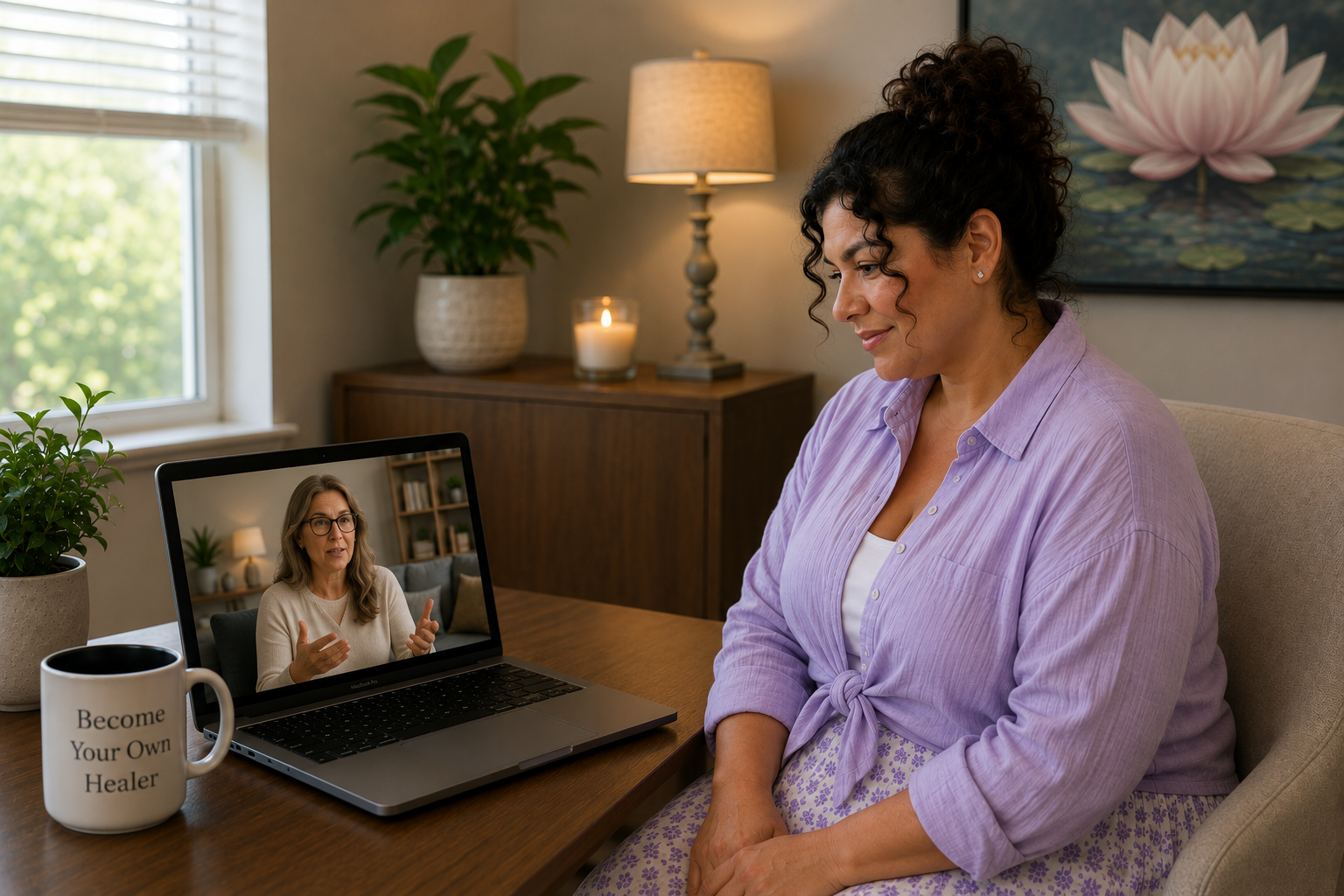
Schedule your online therapy appointment today and take the first step toward becoming your own healer.